

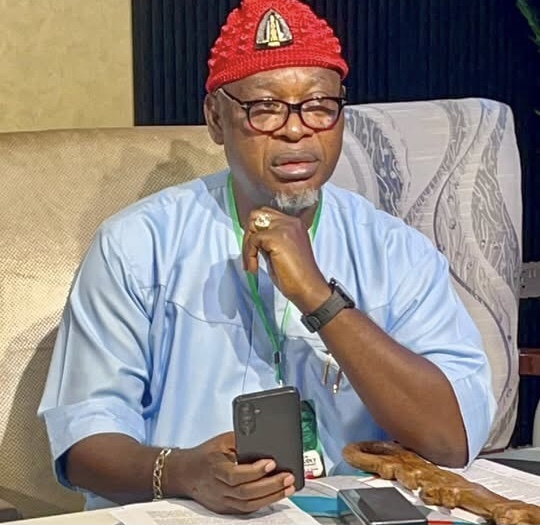
From road construction and rural electrification to modern council secretariats, healthcare, water supply, education, markets and community infrastructure, local government administrations record visible interventions across Akwa Ibom State.
By Chief Edet Isong
The 31 Local Government Areas of Akwa Ibom State are witnessing renewed grassroots development as elected council chairmen intensify efforts to deliver people-oriented projects in their respective communities, encouraged by the support, direction and leadership of Governor Pastor Umo Bassey Eno.
Across the state, local government administrations are becoming increasingly active in infrastructure delivery, with council chairmen initiating projects, awarding contracts and supervising interventions designed to address the immediate needs of their people.
From rural electrification and road construction to modern council secretariats, water projects, healthcare facilities, drainage systems, markets, school infrastructure and other community-based initiatives, the activities of the council chairmen are giving grassroots governance greater visibility.
One particularly noticeable development is the transformation of several local government secretariats. Modern administrative buildings, landscaped surroundings, paved internal roads, drainage systems, parking facilities and renovated legislative chambers are changing the appearance of council headquarters. Some of these facilities are beginning to compare favourably with government office complexes in certain states of the federation.
This emerging development trend reflects Governor Umo Eno’s determination to strengthen local government administration and ensure that development reaches communities beyond the state capital.
GOVERNOR UMO ENO: THE ENCOURAGEMENT BEHIND GRASSROOTS DEVELOPMENT
Since assuming office on May 29, 2023, Governor Umo Eno has consistently emphasised the importance of effective local government administration as a critical component of sustainable development.
The Governor has encouraged council chairmen to move beyond routine administrative activities, identify the needs of their communities, initiate meaningful projects and demonstrate practical leadership at the grassroots.
His One Project Per Local Government Initiative was an important step in this direction.
The initiative was designed to stimulate economic activities, create employment opportunities and ensure that every local government area benefits from a development project. The Governor also encouraged the engagement of indigenous contractors, particularly those from benefiting communities, to create jobs and stimulate economic activities at the grassroots.
Beyond this initiative, Governor Eno has consistently challenged council chairmen to concentrate on projects that directly improve the living conditions of their constituents.
At a special meeting with the 31 council chairmen in October 2026, the Governor commended their development initiatives and encouraged them to sustain the momentum. He also expressed satisfaction with the healthy competition among the councils, urging the chairmen to intensify their efforts to improve the lives of their people.
That encouragement is gradually translating into increased project activities across the local government areas.
COUNCIL CHAIRMANSHIP NOW GOING BEYOND OFFICE ADMINISTRATION
One notable development under the present administration is the increasing determination of council chairmen to demonstrate that local government leadership involves more than occupying offices and attending official functions.
Council chairmen are identifying community needs, awarding contracts and supervising projects aimed at addressing infrastructure deficiencies in their respective areas.
This is particularly important because local government is the tier of government closest to the people.
A chairman who provides electricity to an underserved community, constructs a rural road, rehabilitates a health centre, builds a market or provides potable water is directly addressing the everyday challenges of residents.
It also demonstrates that local government resources can be translated into visible development through commitment, proper planning, responsible management and effective supervision.
MODERN COUNCIL SECRETARIATS: A NEW FACE OF GRASSROOTS ADMINISTRATION
Perhaps one of the most visible developments taking place in several local government areas is the transformation of council secretariats.
For many years, some local government headquarters struggled with inadequate office accommodation, deteriorating infrastructure, poor access roads and environments that did not reflect the importance of the institutions.
Today, several council chairmen are investing in the remodelling, rehabilitation and modernisation of their administrative headquarters.
In some locations, the transformation is remarkable, with secretariats beginning to resemble well-developed government office complexes.
ETIM EKPO: A REMARKABLE SECRETARIAT TRANSFORMATION
Under the chairmanship of Hon. Gideon Uwa, Etim Ekpo Local Government Area has recorded significant improvements to its council headquarters.
The administration has remodelled the council secretariat, including landscaping, asphalt paving of internal roads, construction of concrete drainage systems, elevated parking facilities and walkways.
The legislative chambers have also been renovated.
Beyond the secretariat, the chairman has highlighted the construction of the Utu Etim Ekpo Ultra-Modern Market, designed to include a solar-powered cold room.
Other interventions include solar-powered streetlights, educational support, healthcare programmes and youth and women empowerment initiatives.
The transformation of the secretariat is particularly noteworthy because it provides a more conducive working environment for council officials, staff and visitors.
IBENO: MODERN SECRETARIAT, ICT AND JAMB CENTRE
Ibeno Local Government Area, under the chairmanship of Hon. Glory Effiong, has also recorded important developmental interventions.
Among the projects highlighted by the council are an ultra-modern secretariat complex, an ICT and JAMB Centre, drainage works and road rehabilitation.
The council has also undertaken the improvement of the Iwuokpom Primary Health Centre. The construction of a Compassionate Home at Okorutip is another humanitarian initiative designed to support vulnerable residents.
These projects demonstrate attention to administrative infrastructure, education, healthcare and social welfare.
EKET: CITY HALL AND MODERN ADMINISTRATIVE COMPLEX
In Eket Local Government Area, under Chairman Hon. Tommey, the Eket City Hall is among the notable facilities delivered by the council.
The administration is also undertaking the remodelling of its secretariat into a modern administrative complex to provide a more conducive working environment.
The construction of a new legislative complex is another important intervention aimed at improving the working conditions of the legislative arm of the council.
UKANAFUN: SECRETARIAT REMODELLING AND WOMEN DEVELOPMENT CENTRE
In Ukanafun, Chairman Hon. Prince Uyo Ukpanah has highlighted the transformation of the local government secretariat.
The council has also furnished and equipped its Women Development Centre for meetings, conferences and other community activities.
The Udo Ekpenyong Legacy Hall and a proposed stadium are among other facilities highlighted by the administration.
ETINAN: ELECTRIFICATION, WATER, ROADS AND MODERN BUS TERMINUS
Etinan Local Government Area, under Chairman Hon. Uko Umoh, has also recorded notable interventions.
One of the remarkable projects is the development of an ultra-modern bus terminus designed to include lock-up stores, a warehouse and other facilities to support commerce and revenue generation.
The council has also undertaken electrification projects aimed at restoring electricity to communities that reportedly experienced years without regular power supply.
Other interventions include the rehabilitation of water projects across wards, grading of rural roads, renovation of healthcare facilities, town halls and schools, alongside educational support and empowerment programmes.
ONNA: INVESTMENT IN ADMINISTRATION, EDUCATION AND HUMAN CAPITAL
Onna Local Government Area has also recorded important developmental initiatives under its present administration.
Among the projects highlighted are the construction of a modern Executive Council building, internal roads within the council secretariat and other administrative infrastructure.
The council has also undertaken road grading, rehabilitation of community water projects and educational interventions.
Scholarship support for postgraduate students and grants for graduates are among the human capital development programmes reported by the council.
IKOT ABASI: ROAD CONSTRUCTION, WATER AND RURAL ELECTRIFICATION
A notable example of council-led development is Ikot Abasi Local Government Area under the chairmanship of Hon. Ime Williamson Essien.
The council has undertaken several interventions, including the construction of the Ikot Umiang–Okon Road with a bridge.
Other interventions reported by the council include the Essene Water Project, the Ikot Okwo Health Centre and rural electrification projects in Ikot Ikara, Ikot Obio Ekpe and Iboro communities in Edemaya Clan.
The water project features a solar-powered facility designed to improve access to water for residents.
The chairman has attributed his motivation to Governor Umo Eno’s encouragement of grassroots development and the opportunity for local government councils to address the needs of their people.
URUE OFFONG/ORUKO: ELECTRICITY RESTORATION AND WIDE-RANGING COMMUNITY DEVELOPMENT
Urue Offong/Oruko Local Government Area, under the chairmanship of Rt. Hon. Uno Etim Uno, deserves particular mention for the range of development initiatives undertaken across the area.
During his administration’s second-anniversary assessment in September 2026, the chairman highlighted interventions covering infrastructure, education, healthcare, rural development, electricity, water supply and social welfare.
One of the most remarkable achievements is the restoration and extension of electricity to communities that had experienced years of darkness.
The council provided transformers to communities including Udung Uweh, Mbokpu Eyokan and Ikpe, connecting previously underserved communities to the national electricity grid, according to the chairman’s project account.
Other transformer interventions have also been reported in communities including Atte, Eyufuo and Umume.
The council has installed a solar panel farm to support electricity supply at the local government secretariat.
In the area of water supply, the administration has deployed and upgraded solar-powered water facilities in Elei, Urue Offong, Eyobiasang and Ukuda, while also supporting solar water interventions in Ubodung.
The council’s investment in public infrastructure includes the construction and furnishing of an ultra-modern Banquet Hall equipped with a public-address system, renovation of Unity Hall in Oruko, improvement of the council access road, internal secretariat roads, drainage systems and streetlights.
The main administrative block has also undergone renovation and beautification.
An ongoing sports stadium project is another major intervention aimed at providing recreational and sporting facilities for residents, particularly young people.
In education, the council has provided free JAMB forms, preparatory classes, CBT training, scholarships, classroom renovations, dual-seater desks and customised exercise books.
Healthcare interventions include free medical outreaches, reactivation of previously non-functional water schemes and other community health and sanitation initiatives.
The chairman has also reported business grants, women’s empowerment programmes, skills acquisition support for young people and financial assistance to senior citizens.
These interventions demonstrate an administration seeking to address development from several angles rather than concentrating on a single sector.
The chairman has repeatedly linked his development philosophy to Governor Umo Eno’s ARISE Agenda, expressing his determination to bring development closer to the people.
ORON: MODERN ADMINISTRATIVE COMPLEX, SOLAR ELECTRICITY AND COMMUNITY INFRASTRUCTURE
Oron Local Government Area, under the chairmanship of Hon. Chief Okon Asukwo Enweme, popularly known as Levile, has also recorded important developments in administrative infrastructure and community facilities.
One of the most visible achievements is the construction and commissioning of a new ultra-modern administrative complex named after Governor Pastor Umo Bassey Eno.
The facility has centralised important council administrative operations, bringing the chairman, vice chairman, supervisors, council secretary and other departments under one roof. The development is intended to improve administrative coordination, accessibility and service delivery.
The council has also undertaken the construction of internal roads within its premises, landscaping and beautification of the secretariat, reroofing of council blocks and rehabilitation of the legislative building.
Other interventions include the establishment of an ICT centre, acquisition of a generating plant and installation of solar power systems to improve electricity supply within the council facilities.
The administration has also constructed town halls and provided solar-powered streetlights around the council premises.
In the area of water supply, the council has undertaken a solar-powered water project at Idu Ukpata/Afaha Eduok in Ward 4, aimed at improving access to clean drinking water.
The donation of a new bus to the Oron chapter of the Nigeria Union of Local Government Employees is another intervention aimed at supporting workers and improving their welfare.
The council has also prioritised sanitation and environmental cleanliness through inspection and clean-up exercises across communities in Oron.
Security has equally received attention, with the chairman emphasising community participation and the protection of lives, property and commercial facilities.
The administration’s wider development outlook also recognises the importance of the Oron Beach transformation, including the proposed marine terminal, jetty, warehouse and recreational facilities, as part of the broader economic development potential of Oro Nation.
The projects and initiatives in Oron reflect an approach that combines administrative modernisation, workers’ welfare, community infrastructure, security and economic development.
A NEW CULTURE OF GRASSROOTS PROJECT DELIVERY
The activities recorded in these local government areas demonstrate the growing attention being given to community infrastructure by local government administrations.
Across the 31 local government areas, council development activities and programmes cover several important sectors:
ROAD CONSTRUCTION AND REHABILITATION: Local government interventions in rural and internal roads are helping to improve access to communities, farms, markets and other economic centres.
RURAL ELECTRIFICATION: Transformer installations, electricity restoration and other interventions are helping communities address power supply challenges.
WATER SUPPLY: Water projects, including boreholes and solar-powered facilities, are important interventions aimed at improving access to potable water.
HEALTHCARE: Rehabilitation and improvement of primary healthcare facilities bring essential medical services closer to rural residents.
EDUCATION: Improvements to school infrastructure, ICT facilities, JAMB centres and educational support programmes contribute to creating better learning opportunities.
MODERN MARKETS AND COMMERCIAL FACILITIES: The construction of markets, bus terminals and other commercial infrastructure helps stimulate economic activities and create employment.
COMMUNITY INFRASTRUCTURE: Drainage systems, town halls, women development centres and other public facilities address local development priorities.
EMPLOYMENT AND ECONOMIC ACTIVITIES: Contract awards and project execution create opportunities for local contractors, artisans, suppliers and workers.
These interventions demonstrate the importance of allowing local government councils to play their constitutional and developmental roles.
GOVERNOR’S SUPPORT AND COOPERATION WITH LOCAL GOVERNMENTS
The relationship between Governor Umo Eno and the 31 council chairmen has become an important feature of the state’s grassroots development strategy.
The Governor has consistently encouraged cooperation, accountability and effective project delivery. His administration has also emphasised the need for council chairmen to remain close to their people, understand their challenges and ensure that government interventions address genuine community needs.
The construction of official residences for local government chairmen across the 31 local government areas is another state government intervention aimed at strengthening local government administration.
At the state level, Governor Eno has continued to implement the ARISE Agenda through investments in roads, schools, healthcare facilities, rural development and other infrastructure.
The responsibility of local government councils is to complement these efforts by addressing development needs within their respective jurisdictions.
This partnership between the state and local governments is important in ensuring that development is not concentrated in major towns but reaches communities throughout Akwa Ibom.
31 CHAIRMEN PRESENT SCORECARD TO GOVERNOR ENO
An important demonstration of the activities of the council chairmen was their presentation of a compendium documenting their achievements during their first two years in office to Governor Umo Eno in October 2026.
At the meeting, the Governor commended their initiatives and encouraged them to maintain the momentum.
The ALGON Chairman in Akwa Ibom State and Chairman of Uyo Local Government Council, Dr. Uwemedimo Udo, acknowledged the Governor’s support for local government administration.
He explained that the support had strengthened the councils’ capacity to undertake projects across infrastructure, healthcare, education, agriculture, sports and tourism.
The presentation of the compendium provided an opportunity to document the activities of the councils and demonstrate their contributions to grassroots development.
It also reinforced the importance of accountability, as residents should be able to identify the projects undertaken by their respective councils and assess their impact.
WHEN YOU HAVE A GOOD LEADER AT THE TOP, THE GRASSROOTS FEEL THE IMPACT
There is a popular saying that when you have a good and supportive leader at the top, those working under that leadership are encouraged to perform.
This observation is relevant to the relationship between Governor Umo Eno and the 31 local government chairmen.
Leadership is not only about what the person at the top accomplishes personally; it is also about the ability to encourage other levels of government and institutions to perform their responsibilities.
By encouraging council chairmen to identify local needs, award contracts, execute projects and improve their administrative facilities, Governor Eno has placed greater attention on the developmental responsibilities of local government administrations.
The emerging transformation of council secretariats, construction of community roads, installation of transformers, provision of water facilities and improvement of healthcare and educational infrastructure are examples of the different ways local councils can contribute to development.
The real measure of this leadership approach, however, will be the sustainability of the projects and the positive impact they make on the lives of residents.
HEALTHY COMPETITION AMONG COUNCIL CHAIRMEN
The Governor’s encouragement of healthy competition among the 31 council chairmen is another significant aspect of the emerging development pattern.
When one council undertakes a road project, another may concentrate on electricity, water supply, healthcare or market development.
Such competition, when guided by transparency and the genuine needs of residents, can encourage innovation and improve service delivery.
It also provides an opportunity for council chairmen to learn from one another and replicate successful community development initiatives.
The ultimate beneficiaries should be the people living in the 31 local government areas.
THE WAY FORWARD: SUSTAINING GRASSROOTS DEVELOPMENT
While the growing project activities of the council chairmen deserve attention, the sustainability of these interventions must remain a priority.
Projects must be properly designed, contracts awarded in accordance with due process, contractors adequately supervised and completed facilities maintained.
Residents should also be carried along through community participation and effective communication.
The council chairmen must continue to provide regular accounts of their stewardship so that citizens can understand how public resources are being deployed.
Governor Umo Eno’s encouragement of grassroots administration provides an opportunity for local governments to become more responsive, productive and accountable.
CONCLUSION
The emerging activities of the 31 local government councils demonstrate the importance of effective leadership at the grassroots.
From the modernised secretariats in Etim Ekpo and Ibeno to the administrative complex in Oron, the electricity and water interventions in Urue Offong/Oruko, road construction in Ikot Abasi and development initiatives in Etinan and other council areas, there are visible examples of local government involvement in community development.
The broader message is that development should not be the exclusive responsibility of the state government. Local government councils also have an important role to play in building roads, restoring electricity, providing water, improving healthcare, developing markets and creating economic opportunities.
Governor Umo Eno’s support and encouragement of the council chairmen have helped create an environment in which grassroots leadership and project delivery receive greater attention.
When council chairmen are encouraged to work, given the opportunity to identify local priorities and held accountable for results, local government administration becomes more meaningful to the people.
The people of Akwa Ibom will therefore expect the 31 council chairmen to sustain the momentum, expand their development programmes and ensure that every local government area has visible, measurable and sustainable projects to show for its administration.
Ultimately, the true beauty of governance is not merely having an impressive Government House or an imposing state secretariat. It is also having 31 functional local government headquarters, developed communities and projects that directly improve the lives of ordinary citizens.
CHIEF EDET ISONG
Publisher, Newsday Newspaper
Member, Media Strategies and Communication Directorate of the APC Campaign Committee.