

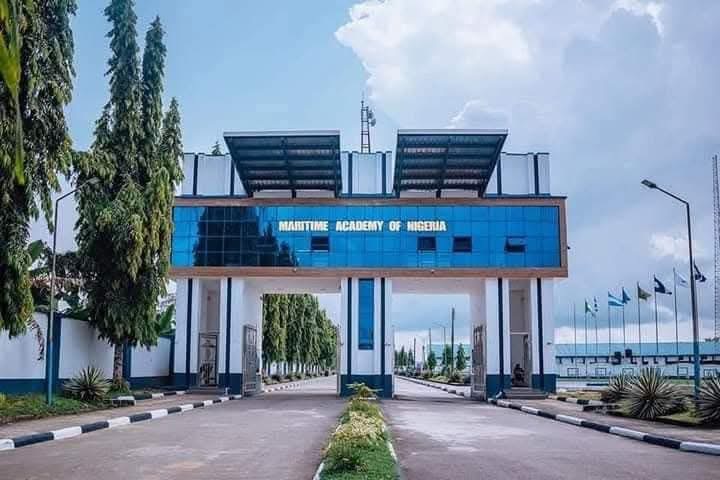
The unfolding situation surrounding the University of Maritime Studies, Oron (UMSO) presents a critical test of Nigeria’s commitment to the rule of law, institutional coherence and policy credibility.
What should have been a seamless and legally straightforward transition, from the defunct Maritime Academy of Nigeria (MAN), Oron to a fully established specialized University, has instead deteriorated into a troubling example of administrative inertia, institutional resistance and governance failure.
In 2022, the National Assembly enacted, and presidential assent was duly granted to, the University of Maritime Studies, Oron (Establishment) Act. By the clear operation of law, this Act repealed the Maritime Academy of Nigeria Act, 2004, thereby abolishing MAN and replacing it with University of Maritime Studies, Oron .This transition is neither optional nor subject to administrative discretion. It is binding on all authorities, institutions and individuals charged with its implementation.
Yet, nearly four years after its enactment, credible evidence suggests that the law has been deliberately undermined, with entrenched institutional resistance frustrating its full execution.
At the center of the controversy are actions by certain actors who continue to promote and sustain operations under the defunct MAN identity. The continued organization of Passing Out Parades (POP) and the issuance of certificates in the name of an abolished institution raise grave legal and ethical concerns.These actions go far beyond administrative lapses. They point to potential fraud, misrepresentation, and the unlawful exercise of authority.
The continued use of the Maritime Academy’s name, insignia, and certification framework after its statutory repeal carries serious legal implications. Such conduct may amount to:
1. Impersonation of a public institution..
2. Issuance of invalid or fraudulent academic credentials.
3. Gross violation of federal statutes.
4. A direct affront to regulatory frameworks governing specialized education and manpower development.
These are not victimless infractions. They strike at the very integrity of Nigeria’s educational system and may expose unsuspecting students to lasting and irreparable harm, particularly the risk of holding qualifications that may be unrecognized both locally and internationally.
Beyond the legal breaches lies a deeper governance crisis. The situation suggests that Ministries, Departments and Agencies of Government responsible for implementation have either failed to act decisively or have tolerated conduct that directly contradicts statutory provisions. This pattern aligns with what scholars define as “constructive non-compliance”, a condition in which laws are not openly defied but are effectively neutralized through delay, reinterpretation or institutional resistance.
For the administration of President Bola Ahmed Tinubu, the implications are significant. The federal government has consistently emphasized reform, particularly within the Blue Economy Sector. However, the apparent inability to enforce a duly enacted law risks projecting an image of inconsistency, weak oversight and administrative fragility.
In governance, perception is reality. When a federal institution appears to operate outside the law without consequence, it raises fundamental questions about the reliability of government policy, even when backed by legislation.
A comparative perspective further underscores the abnormality of the current situation regarding UMSO. Nigeria itself has successfully executed similar institutional transitions. The Petroleum Training Institute (PTI), Effurun, evolved into the Federal University of Petroleum Resources, Effurun (FUPRE), a globally recognized specialized University, through deliberate policy implementation and political will.
Across the world, maritime education thrives within University frameworks. Institutions such as the World Maritime University in Sweden, Dalian Maritime University in China, and the Regional Maritime University in Ghana demonstrate that specialized maritime training and university status are not mutually exclusive but complementary.
The resistance to UMSO, therefore, cannot be credibly justified on academic or structural grounds. Rather, it raises legitimate concerns about institutional self-preservation and vested interests.
If administrative bodies are not held accountable to legislative authority, and if there is no political will to enforce compliance within the public sector, Nigeria risks a steady erosion of public trust and institutional credibility, both domestically and internationally.
The implications extend beyond policy into social stability. The host community and critical stakeholders, who have long aspired to the transformation of the institution into a full-fledged University will increasingly view the current situation as a direct threat to a hard-earned national asset. This is not merely a policy dispute; it is a question of justice, equity and national development.
The path forward is clear and urgent.
First, there must be a firm and unambiguous presidential directive halting all activities conducted under the defunct Maritime Academy framework.
Second, enforcement measures must be taken against functionaries or institutions operating outside the law. Impunity in this context would only deepen institutional decay..
Third, the full administrative activation of UMSO must be immediately prioritized. This includes the appointment of substantive principal officers, the commencement of academic programs, and alignment with national and international regulatory standards.
Finally, the National Assembly, under the leadership of Senate President Godswill Akpabio, must strengthen its oversight functions to ensure that legislative mandates are implemented without obstruction.
Ultimately, the UMSO crisis is not just about one institution. It reflects a broader governance challenge in Nigeria, where laws are enacted but not enforced, and where institutional interests can overshadow national priorities.
If Nigeria is to strengthen its democracy and uphold the supremacy of law, it must move beyond legislation to enforcement. Anything less sets a dangerous precedent: that laws, no matter how clear or well-intentioned, can be ignored without consequence.
That is a risk Nigeria can ill afford.
© Emem Benson, Esq
3rd April, 2026