





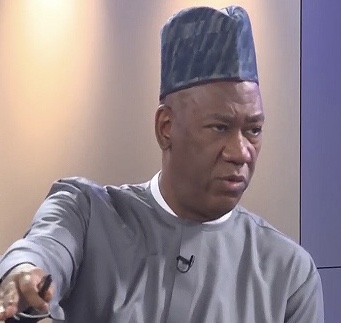
Datti Baba-Ahmed has said that the emergence of a unified opposition presidential candidate for the 2027 general elections is “impossible under the current political realities,” casting doubt on ongoing efforts by opposition parties to form a single front against President Bola Tinubu.
Baba-Ahmed made the statement on Tuesday while appearing on Channels Television’s Politics Today, where he reacted to the recent Ibadan Declaration by a coalition of opposition stakeholders.
The Ibadan Declaration, reached at a meeting of political actors in Ibadan, called for the adoption of a single presidential candidate to challenge the ruling All Progressives Congress in the 2027 elections, in a bid to consolidate opposition strength and improve electoral competitiveness.
However, Baba-Ahmed expressed skepticism over the feasibility of the arrangement, noting that the political structure in Nigeria and the competing ambitions within opposition ranks make consensus extremely difficult to achieve.
According to him, while the idea of a united opposition may appear attractive to citizens seeking political change, the realities on the ground make the selection of a single flag bearer highly unlikely.
He further explained that coalition-building in Nigeria has historically been hindered by ideological differences, leadership tussles, and the struggle for dominance among political actors, factors he said continue to weaken opposition unity.
Baba-Ahmed’s comments have since sparked widespread debate in political circles, with supporters and critics of opposition alliances weighing in on the possibility of a coordinated challenge in 2027.
Observers note that his position reflects long-standing concerns about the ability of opposition parties to overcome internal divisions and build the trust required for a sustainable electoral alliance.
While the Ibadan Declaration was initially viewed as a significant step toward opposition unity, Baba-Ahmed’s remarks suggest that translating such agreements into a practical and workable political arrangement may prove difficult.
Political analysts argue that beyond agreeing on a single candidate, successful coalition-building would require a shared political vision, strong grassroots mobilisation, and the resolution of competing interests across party lines.
As the 2027 general elections draw closer, discussions around opposition unity, strategic alliances, and political realignments are expected to intensify, with many watching closely to see whether opposition parties can overcome their divisions or remain fragmented ahead of the polls.
By Chief Edet Isong


